
The convergence of artificial intelligence and automation is fundamentally transforming how we innovate, creating unprecedented opportunities across industries that are reshaping our economic landscape.

From healthcare breakthroughs to sustainable energy solutions, emerging sectors are experiencing a technological renaissance that promises to redefine human potential. This transformation isn’t just about replacing manual processes—it’s about augmenting human capabilities, solving complex global challenges, and creating entirely new markets that didn’t exist a decade ago. The synergy between AI-driven insights and automated execution is unlocking possibilities that once belonged solely to the realm of science fiction.
🚀 The Dawn of Intelligent Automation in Business
Artificial intelligence has evolved from a futuristic concept to a practical business tool that drives real-world results. Companies across emerging industries are leveraging machine learning algorithms to predict market trends, optimize operations, and deliver personalized customer experiences at scale. This shift represents more than incremental improvement—it’s a fundamental reimagining of how businesses operate.
Automation technologies have matured beyond simple repetitive tasks. Today’s intelligent systems can analyze vast datasets, identify patterns invisible to human observers, and make autonomous decisions that improve over time. This evolution is particularly transformative in industries like fintech, where algorithmic trading and fraud detection systems process millions of transactions in milliseconds, or in precision agriculture, where AI-powered drones monitor crop health across thousands of acres.
Breaking Down Traditional Industry Barriers
The integration of AI and automation is erasing conventional boundaries between sectors. Healthcare now intersects with data science, manufacturing merges with robotics engineering, and retail blends with predictive analytics. This convergence creates hybrid industries where innovation accelerates exponentially, driven by cross-pollination of ideas and technologies.
Startups in emerging markets are particularly well-positioned to capitalize on these trends. Without legacy infrastructure constraints, they can build AI-native operations from the ground up, achieving efficiency levels that established corporations struggle to match. This democratization of advanced technology is leveling the competitive playing field globally.
💡 Transformative Applications Across Key Sectors
Healthcare and Biotechnology Revolution
The healthcare industry stands at the forefront of AI-driven innovation. Machine learning algorithms now assist in diagnosing diseases with accuracy rates that rival or exceed human specialists. In radiology, computer vision systems analyze medical images to detect cancerous tumors at earlier stages than traditional methods. Drug discovery processes that once took years now compress into months through AI-powered molecular modeling.
Wearable health devices equipped with automated monitoring systems track vital signs continuously, alerting both patients and physicians to anomalies in real-time. This shift from reactive to proactive healthcare is reducing hospital readmissions and improving patient outcomes significantly. Telemedicine platforms enhanced by AI triage systems are bringing specialist consultations to remote areas previously underserved by medical infrastructure.
Sustainable Energy and Environmental Management
Climate technology companies are deploying AI systems to optimize renewable energy production and distribution. Smart grids powered by machine learning algorithms balance electricity supply and demand dynamically, integrating variable sources like solar and wind power more efficiently than ever before. Predictive maintenance systems use sensor data to prevent equipment failures in wind turbines and solar installations, reducing downtime and operational costs.
Environmental monitoring has reached unprecedented sophistication through automated satellite imagery analysis. AI algorithms can track deforestation, monitor ocean health, predict wildfire risks, and measure carbon emissions with granular precision. These capabilities are essential tools for governments and organizations working to meet climate goals and preserve natural ecosystems.
Advanced Manufacturing and Industry 4.0
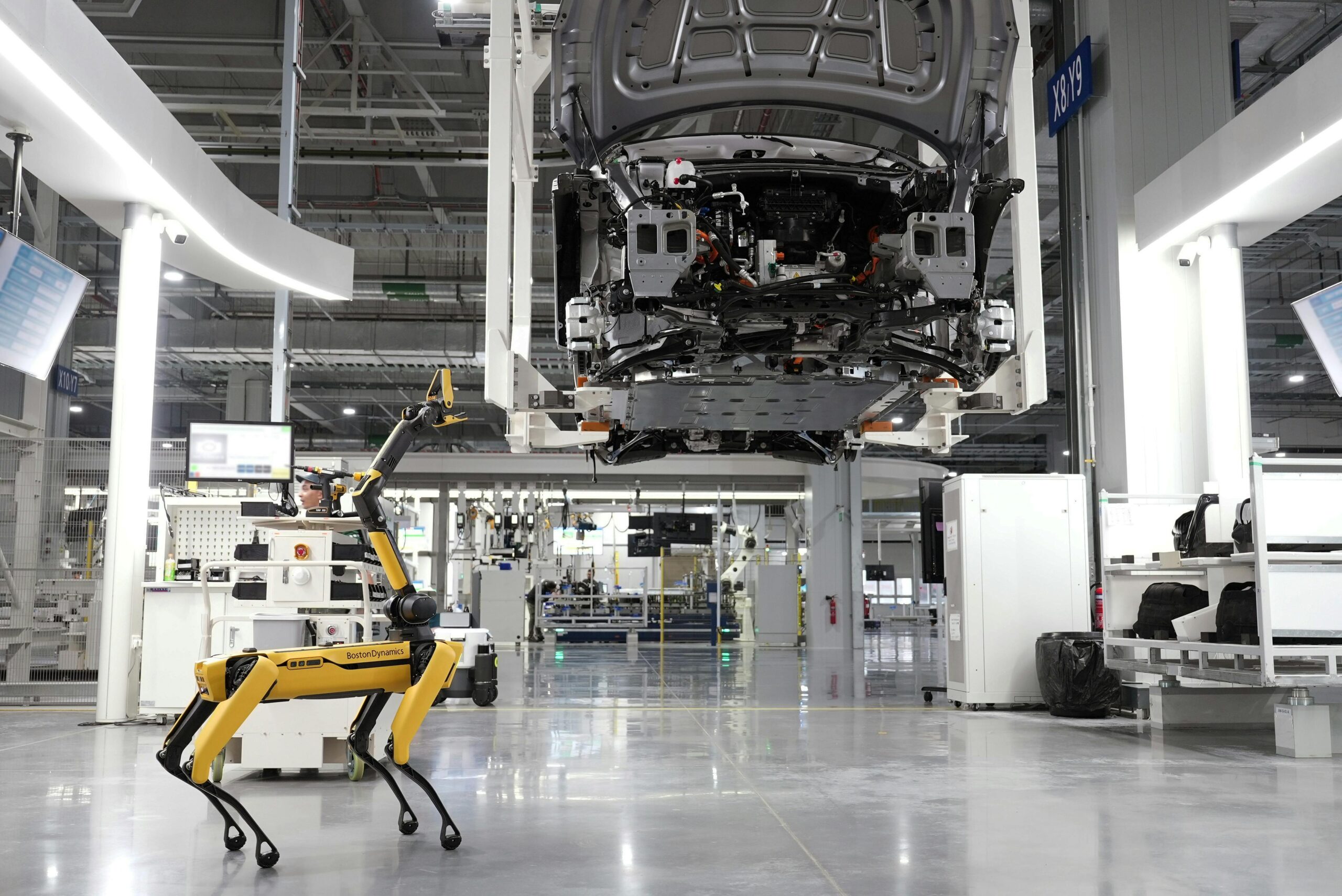
The fourth industrial revolution is characterized by smart factories where AI and automation create self-optimizing production systems. Collaborative robots work alongside human operators, handling dangerous or physically demanding tasks while workers focus on complex problem-solving and quality control. Computer vision systems perform quality inspections with microscopic precision, detecting defects that would escape human observation.
Supply chain management has been revolutionized by predictive analytics that forecast demand fluctuations, optimize inventory levels, and identify potential disruptions before they impact production. Digital twin technology creates virtual replicas of physical manufacturing processes, allowing engineers to test modifications and troubleshoot issues in simulated environments before implementing changes on the factory floor.
📊 Measuring the Impact: Real Numbers and Projections
The economic impact of AI and automation in emerging industries is substantial and accelerating. Global investment in artificial intelligence reached over $200 billion in recent years, with emerging sectors capturing an increasing share of that capital. Companies implementing intelligent automation report productivity improvements ranging from 20% to 40% across various operational metrics.
Job market transformations are equally significant. While automation displaces certain routine roles, it simultaneously creates demand for new positions that didn’t exist previously. Data scientists, machine learning engineers, automation specialists, and AI ethics officers represent rapidly growing career paths. The World Economic Forum estimates that by 2025, automation and AI will create 97 million new jobs globally while displacing 85 million—a net positive that requires proactive workforce reskilling initiatives.
Competitive Advantages for Early Adopters
Organizations that embrace AI and automation early gain substantial competitive advantages. Faster time-to-market, reduced operational costs, improved customer satisfaction, and enhanced innovation capabilities compound over time. Companies leveraging these technologies report higher profit margins and stronger market positions compared to slower-moving competitors.
Small and medium enterprises particularly benefit from cloud-based AI services that eliminate the need for massive upfront infrastructure investments. Democratized access to powerful machine learning tools through platforms like TensorFlow, PyTorch, and various AutoML services means that innovation is no longer the exclusive domain of tech giants.
🔐 Navigating Challenges and Ethical Considerations
The rapid deployment of AI and automation raises important ethical questions that emerging industries must address proactively. Data privacy concerns become paramount when systems process sensitive personal information. Algorithmic bias can perpetuate or amplify existing inequalities if training data reflects historical prejudices. Transparency and explainability in AI decision-making are essential for maintaining public trust and regulatory compliance.
Responsible innovation frameworks are emerging to guide development. These include principles like fairness in algorithmic outcomes, accountability for automated decisions, transparency in how systems operate, and human oversight of critical processes. Leading companies are establishing AI ethics boards and conducting regular audits of their automated systems to identify and correct potential issues.
Regulatory Landscape and Compliance
Governments worldwide are developing regulatory frameworks to govern AI and automation applications. The European Union’s AI Act establishes risk-based requirements for different types of AI systems. Similar initiatives in the United States, China, and other major economies create compliance considerations for companies operating internationally.
Emerging industries must balance innovation speed with regulatory compliance. Companies that proactively engage with policymakers and adopt ethical AI practices position themselves favorably as regulations evolve. This approach reduces future compliance costs and builds stakeholder confidence in automated systems.
🌐 The Global Innovation Ecosystem
AI and automation innovation isn’t confined to traditional technology hubs. Emerging markets in Southeast Asia, Africa, Latin America, and Eastern Europe are developing vibrant tech ecosystems that leverage automation to address local challenges while creating globally competitive solutions. This geographic diversification of innovation brings fresh perspectives and culturally informed applications.
Collaborative networks connecting research institutions, startups, established corporations, and government agencies accelerate innovation velocity. Open-source communities contribute to AI frameworks that benefit the entire industry. Knowledge sharing through conferences, publications, and online platforms creates a rising tide that lifts all participants in the ecosystem.
Investment Trends and Funding Opportunities
Venture capital investment in AI-powered startups continues growing despite economic uncertainties. Investors recognize that companies leveraging automation gain operational efficiencies that improve resilience during challenging periods. Government grants and incentive programs in many countries support AI research and deployment, particularly in strategic sectors like healthcare, defense, and clean energy.
Corporate venture arms from established companies actively seek partnerships with innovative startups, providing not just capital but also domain expertise, customer access, and distribution channels. This symbiotic relationship between established enterprises and agile innovators accelerates commercialization of breakthrough technologies.
🎯 Strategic Implementation for Organizations
Successfully integrating AI and automation requires thoughtful strategy beyond simply purchasing technology. Organizations must assess their current processes to identify high-impact automation opportunities. Starting with pilot projects in contained environments allows teams to learn and refine approaches before scaling across the organization.
Change management becomes crucial when introducing automation. Employee engagement and training programs help workforce members transition from displaced roles to new positions that leverage uniquely human capabilities like creativity, emotional intelligence, and complex problem-solving. Organizations that invest in reskilling their workforce see higher automation success rates and better employee retention.
Building AI-Ready Infrastructure
Technical infrastructure forms the foundation for successful AI implementation. Cloud computing platforms provide scalable computational resources without massive capital expenditure. Data pipelines must be established to collect, clean, and organize information that feeds machine learning models. Cybersecurity measures protect sensitive data and prevent adversarial attacks on AI systems.
Organizational culture matters as much as technology. Leadership commitment to innovation, tolerance for calculated risks, and willingness to challenge conventional approaches create environments where AI and automation thrive. Cross-functional teams that blend technical experts with domain specialists produce solutions that address real business challenges effectively.
🔮 Future Horizons: What’s Next for AI-Driven Industries
The trajectory of AI and automation points toward increasingly sophisticated applications. Quantum computing promises to unlock computational capabilities that will revolutionize machine learning training and enable simulation of complex systems currently beyond reach. Edge computing brings AI processing directly to devices, enabling real-time decision-making without cloud dependency and addressing latency-sensitive applications.
Natural language processing advances are making human-machine interaction increasingly seamless. Conversational AI systems understand context, emotion, and intent with growing sophistication, transforming customer service, education, and professional services. Generative AI models create original content—from product designs to software code—augmenting human creativity rather than replacing it.
Emerging Technology Convergence
The next wave of innovation will emerge from convergence points where multiple technologies intersect. AI combined with blockchain creates transparent, auditable automated systems for supply chains and financial services. Robotics enhanced with advanced AI enables autonomous vehicles, warehouse automation, and robotic surgery with unprecedented precision. Augmented reality interfaces powered by AI provide immersive experiences for training, design, and remote collaboration.
Biotechnology integration with AI accelerates personalized medicine, where treatment protocols are customized to individual genetic profiles. Agricultural systems combining IoT sensors, AI analytics, and automated equipment optimize resource use while increasing yields to feed growing global populations sustainably.
💼 Preparing for the Automated Future
The question facing organizations and individuals isn’t whether to embrace AI and automation, but how quickly and effectively they can adapt. Continuous learning becomes essential as technological capabilities evolve rapidly. Professionals who develop hybrid skill sets combining domain expertise with data literacy and technological fluency will thrive in automated environments.
Educational institutions are adapting curricula to prepare students for this transformed landscape. Emphasis shifts from rote memorization toward critical thinking, creativity, and adaptability—capabilities that complement rather than compete with automated systems. Lifelong learning platforms and micro-credential programs enable mid-career professionals to acquire new skills without pausing their careers.
The revolution driven by AI and automation in emerging industries represents one of history’s most significant technological transitions. Organizations and individuals who approach this transformation strategically—balancing innovation enthusiasm with ethical responsibility, investing in both technology and people, and maintaining flexibility to adapt as capabilities evolve—will be best positioned to capitalize on the extraordinary opportunities ahead. The future isn’t something that simply happens to us; it’s something we actively create through the choices we make today in deploying these powerful technologies responsibly and imaginatively.